





































The 2026 real estate market is not frozen, but it is still facing affordability challenges. Buyers have more options than they did during the tightest inventory years, but higher mortgage rates and record prices are keeping activity muted. The result is a market that looks more balanced on paper but still feels expensive on the ground.
The biggest story at mid-year is the split between more choice and limited movement, which is why emerging real estate markets are becoming so important to watch. Inventory has improved, but many buyers are still payment-sensitive. Sellers have more competition, but prices are not falling nationally. And in some markets, especially higher-end and supply-constrained areas, competition is still very real.
Here’s a quick look at where the national real estate market stands at mid-year:
| Market insight | Key stats |
| 📊 Home prices are still setting records. | The median existing-home price reached $440,600 in June 2026, up 1.8% year-over-year, marking a new all-time high. [1] |
| 📊Sales are moving sideways. | Existing-home sales fell 2.4% from May to a seasonally adjusted annual rate of 4.09 million in June, while sales during the first six months of the year were up just 0.7%. [1] |
| 📊Inventory has improved, but not enough to change the affordability math. | Existing-home inventory dipped 0.6% in June to 1.56 million units, up only 1.3% over the year, equal to a 4.6-month supply. [1] |
| 📊High level of active listings. | Redfin reported 1,483,839 active listings in May of 2026, the highest level since 2020; total home sales were up 0.4% month over month. [2] |
| 📊Buyers have more room to negotiate, but discounts are not universal. | Redfin found that 59.8% of homes sold in May 2026 closed below their original list price, though that share declined for the sixth straight month. [2] |
| 📊Homes are taking longer to sell. | The typical US home spent 49 days on the market in May 2026, up three days from a year earlier, according to Redfin. [2] |
| 📊Mortgage rates are still the market’s pressure point. | The average 30-year fixed mortgage rate rose to 6.49% in early July 2026, up from 6.43% the week before but below 6.72% one year earlier, according to Freddie Mac data reported by AP. [3] |
| 📊The market is increasingly regional | Redfin’s May metro data showed prices rising fastest in San Francisco, St Louis, and Pittsburgh, while prices fell most in San Jose, Orlando, Seattle, and San Antonio. [3] |
What are emerging real estate markets?
Emerging real estate markets are areas where buyer demand, housing supply, affordability, job access, and long-term growth signals are converging. These markets are not always the cheapest or fastest-growing metros. In 2026, many of the strongest emerging real estate markets are places where limited inventory, regional migration, and relative affordability are keeping demand active even as the broader real estate market slows.
For buyers, an emerging market may offer a better balance of price, inventory, and long-term value. For sellers, it may signal stronger local demand than national headlines suggest. For investors, emerging real estate markets can indicate areas where rental demand, appreciation potential, and entry prices still make sense.
Related Articles
- The Best & Worst Times To Sell a House in 2026
- The 10 Cheapest States to Buy a House in 2026
- 10 Best States to Invest in Real Estate
- The 10 Best States for Landlords
10 hottest markets of 2026
While many pandemic-era boomtowns are cooling, Zillow’s 2026 hottest markets point to a different kind of momentum in the real estate market. This year’s list is not dominated by the fast-growing Sun Belt cities that led earlier in the cycle. Instead, emerging real estate markets like Hartford, Buffalo, and Providence are standing out alongside larger metros like Boston and Los Angeles. The common thread is not explosive growth. It is limited supply, relative affordability, and buyers still competing for homes in markets where inventory has not fully caught up.
That shift matters because “hot” no longer just means the fastest-growing city on the map. In 2026, the strongest emerging real estate markets will often be those where buyers are still finding enough value to remain active, even with higher mortgage rates. For agents, investors, and brokers, Zillow’s list is a reminder that opportunity is becoming more selective. The markets to watch are not always the biggest or flashiest. They are the ones where pricing, supply, job access, and regional demand are still working together.
| Metro | Median sale price | Median list price | Median days to pending |
| Hartford, CT | $277,200 | $252,467 | 13 |
| Buffalo, NY | $232,167 | $225,650 | 10 |
| New York, NY | $771,667 | $868,000 | 53 |
| Providence, RI | $409,333 | $444,800 | 13 |
| San Jose, CA | $1,422,667 | $1,262,629 | 14 |
| Philadelphia, PA | $245,333 | $268,267 | 17 |
| Boston, MA | $786,750 | $887,667 | 14 |
| Los Angeles, CA | $1,004,250 | $1,106,33 | 24 |
| Richmond, VA | $357,500 | $399,316 | 6 |
| Milwaukee, WI | $217,083 | $231,833 | 19 |
*All data received from Zillow as of July 2026
How I chose these emerging real estate markets
This list is based on Zillow’s 2026 hottest markets, along with mid-year housing data showing where demand remains strong despite affordability challenges. The markets included here stand out for a mix of limited supply, buyer competition, relative affordability, pricing momentum, job access, and regional demand.
I also look at how each metro fits in the broader 2026 real estate market. Some markets, like Buffalo, Milwaukee, Philadelphia, and Richmond, stand out for offering more approachable entry points. Others, like Boston, New York, Los Angeles, and San Jose, are driven more by scarcity, high-income demand, and long-term appreciation potential.
1. Hartford, Connecticut
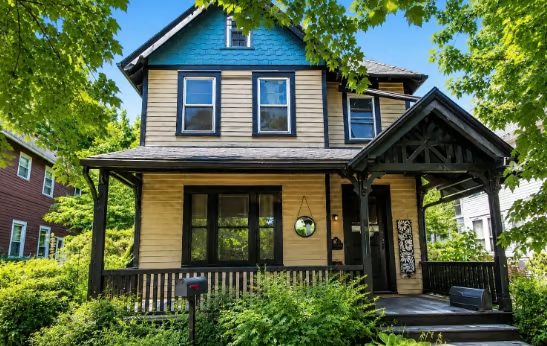
Hartford is Zillow’s hottest market for 2026, and the reason is clear: buyers are competing for a limited supply in a metro that still offers relative value compared with nearby New York and Boston. The market has become especially competitive in the surrounding suburbs, where buyers want more space, strong schools, and access to major Northeast job centers without paying big-city prices. For investors, Harford’s appeal comes from the combination of rising demand, constrained inventory, and long-term rental potential in a market that remains more approachable than many coastal alternatives.
2. Buffalo, New York
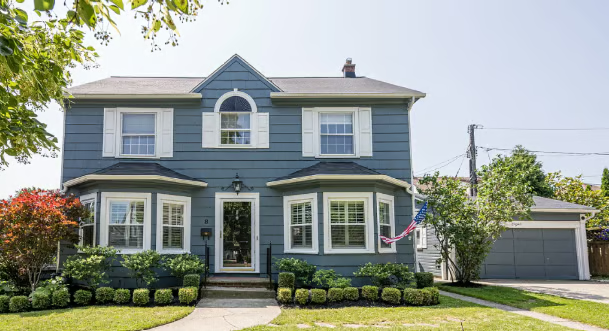
Buffalo continues to stand out because it offers something buyers and investors struggle to find in many other markets: affordability backed by demand. While prices have climbed, the metro still looks accessible compared with much of the Northeast, helping keep buyer competition strong. For investors, Buffalo is especially interesting because lower entry prices can make cash flow more realistic, while steady demand from health care, education, and local employment anchors supports the long-term rental market.
3. New York, New York
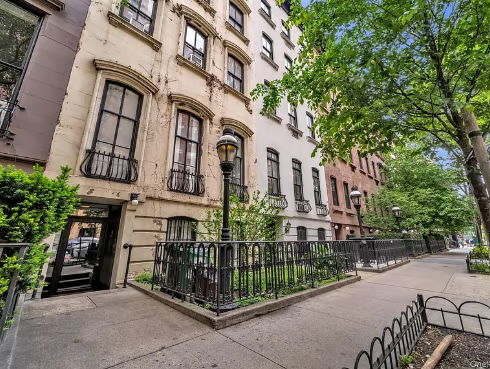
New York landing on Zillow’s hottest markets list shows that high prices are not always enough to slow demand. The metro remains expensive, but limited supply, strong employment, and the city’s long-term pull continue to support buyer competition. For investors, New York is rarely an easy cash-flow play, but it remains one of the country’s most resilient real estate markets, especially for buyers focused on long-term appreciation, rental demand, and properties in supply-constrained neighborhoods.
4. Providence, Rhode Island
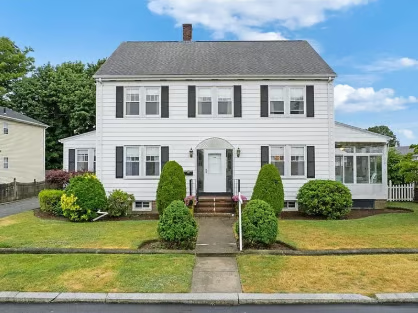
Providence is benefiting from buyers and renters who want access to the Northeast without paying Boston prices. Its location, university presence, healthcare employment, and limited housing supply all help keep demand steady. For investors, Providence is particularly compelling because it can offer a mix of student housing, long-term rentals, and small multifamily opportunities in a market where rental competition has also been strong.
5. San Jose, California
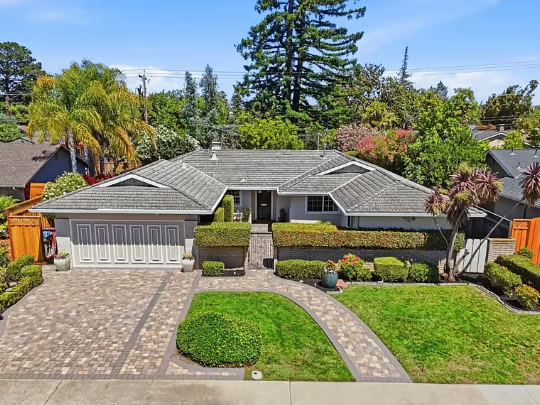
San Jose stands out for a very different reason from the more affordable Northeast markets on Zillow’s list. This is not a value market in the traditional sense, but it is still driven by severe supply constraints, high incomes, and proximity to major tech employers. For investors and agents, San Jose’s appeal is less about low entry prices and more about scarcity. When inventory is limited and high-earning buyers remain active, competition can stay intense even in one of the country’s most expensive markets.
6. Philadelphia, Pennsylvania
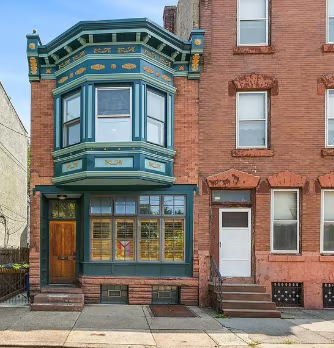
Philadelphia is gaining attention for its big-city infrastructure, job access, and relative affordability compared with New York, Boston, and Washington, D.C. Buyers priced out of more expensive Northeast metros may still see Philadelphia as a realistic path to homeownership. For investors, the city offers a wide range of opportunities, from rowhomes and small multifamily properties to neighborhoods benefiting from access to universities, healthcare, and transit.
7. Boston, Massachusetts
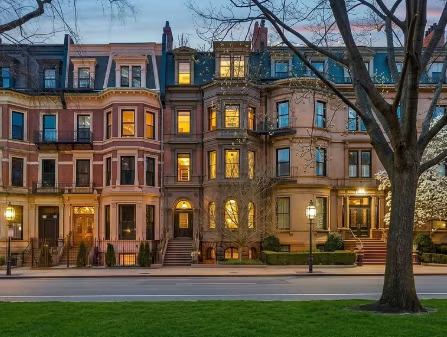
Boston remains one of the most competitive and supply-constrained markets in the country. High home prices have not erased demand because the metro continues to benefit from strong employment in healthcare, education, biotech, and technology. For investors, Boston can be difficult to enter due to pricing, but its long-term fundamentals remain strong. Limited housing supply, a large renter population, and high-income demand continue to support the market.
8. Los Angeles, California

Los Angeles appearing on Zillow’s hottest markets list is a reminder that even expensive markets can remain competitive when supply is limited and demand is deeply rooted. Affordability is a major challenge, but the metro still has strong employment and lifestyle appeal, as well as long-term housing scarcity. For investors, Los Angeles is not typically about easy entry or immediate cash flow. It is more often a long-term play built around land scarcity, rental demand, and neighborhood-level appreciation.
9. Richmond, Virginia
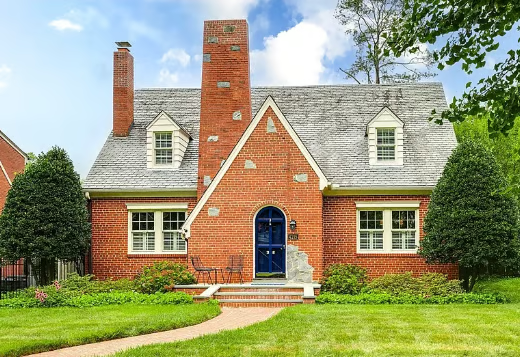
Richmond continues to attract attention from buyers seeking a lower-cost alternative to Washington, D.C., without sacrificing access to jobs, culture, and a growing local economy. The city has become especially appealing to remote and hybrid workers, young professionals, and families looking for a more manageable cost of living. For investors, Richmond offers a compelling mix of rental demand, neighborhood revitalization, and long-term growth potential.
10. Milwaukee, Wisconsin
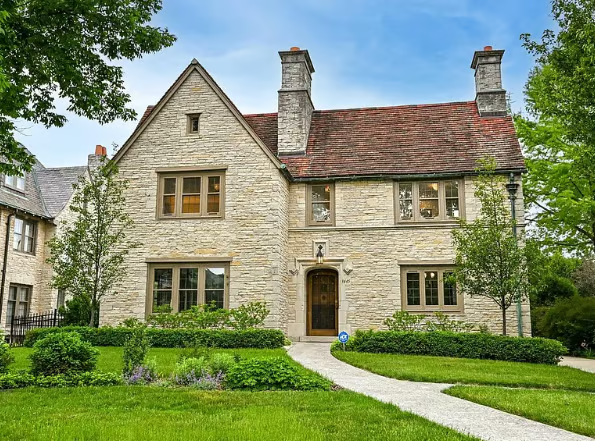
Milwaukee rounds out Zillow’s top 10 because it combines affordability, limited supply, and steady regional demand. Buyers priced out of larger Midwestern and coastal markets may see Milwaukee as a more realistic option, while investors may be drawn to its lower entry prices and rental potential. The market may not have the flash of a coastal tech hub, but that is part of its appeal. Milwaukee offers a practical, value-driven housing story at a time when affordability continues to shape buyer decisions.
What’s driving today’s housing market trends
- Inventory has improved, but supply remains uneven: Buyers have more options than during the tightest years, yet many markets are still far from oversupplied.
- Affordability is still holding back activity: Higher mortgage rates and record prices continue to limit what buyers can afford, especially first-time buyers and move-up buyers with tighter budgets.
- Home prices are rising more slowly, not falling nationally: Sellers may have less leverage than they did during the frenzy years, but national price declines have not taken hold.
- Buyers are more selective: Homes that are overpriced, outdated, or poorly marketed are more likely to sit on the market, while well-priced homes in supply-constrained areas can still move quickly.
- The market is becoming more regional: Some metros are seeing more negotiation and price pressure, while others remain highly competitive because of job access, limited inventory, or relative affordability.
- Mortgage rates remain the biggest wildcard: Even small rate changes can shift buyer demand quickly because monthly payments are already stretched.
- Rental demand is still supporting investor interest: In markets with job stability, universities, healthcare systems, or limited housing supply, rental demand can help support long-term investors’ confidence.
Is now a good time to buy or sell?
The short answer: it depends on your math, your market, and your timeline. The 2026 market is giving buyers more room to think in some areas, but sellers still have leverage in markets where inventory is tight and demand remains strong.
If you’re house shopping this year, you have more to work with than you did during the tightest parts of the market. Inventory has improved, which means more homes to compare, less pressure to jump on the first decent option, and more room to evaluate whether a property actually fits your budget.
On top of that, some sellers are more flexible. Homes are taking longer to sell in many markets, and more buyers are negotiating on price, repairs, credits, and closing costs. It is not a cheap market, especially with mortgage rates still elevated, but it is more negotiable than the one buyers faced during the peak frenzy.
Bottom line: If you can afford today’s payment and find a home that fits your long-term plans, this can be a smart time to negotiate.
If you’re selling this year, you may still have an advantage if you are in a supply-constrained market, but you cannot rely on 2021-urgency. Buyers are more cautious, more payment-sensitive, and more willing to walk away from homes that feel overpriced or underprepared.
That means pricing and presentation matter more. The strongest sellers are the ones who understand their local competition, price based on current conditions, and prepare the homes before listing. In a market with more options, buyers are still willing to act, but they need a clear reason to choose your home.
Bottom line: If you price realistically and present the home well, you can still attract serious buyers, but overpricing poses a greater risk than it did during the frenzy years.
Related Articles
- How to Invest in Real Estate: A 7-Step Beginner’s Guide
- Home Buyer’s Checklist: A Step-by-Step Guide From Planning to Closing
- 17 First-Time Home Buyer Tips: A Real Estate Agent’s Guide
- 20 Weird Real Estate Listings in 2026 You Won’t Believe
Frequently asked questions (FAQs)
What makes a real estate market “emerging”?
An emerging real estate market is usually one where demand is building before prices become fully out of reach. These markets often have a mix of affordability, job access, population movement, limited housing supply, and improving buyer or investor interest.
Are emerging real estate markets always affordable?
No. Some emerging markets are affordable compared with nearby major metros, while others are expensive but still gaining momentum because of limited supply, strong wages, or long-term demand. San Jose, Boston, New York, and Los Angeles are examples of markets where scarcity can matter more than low prices.
What should sellers watch for in 2026?
Sellers should pay attention to local competition, pricing trends, buyer activity, and how long comparable homes are sitting on the market. Even in strong markets, buyers are more selective, so pricing realistically and preparing the home well are still important.